Text: "Let this mind be in you which was also in Christ Jesus; who being in the form of God thought it not robbery to be equal with God; but made Himself of no reputation, and took upon Him the form of a servant, and was made in the likeness of men; and being found in fashion as a man, He humbled Himself, and became obedient unto death, even the death of the cross." Philippians 2:5-8.
"Who gave Himself for our sins." Galatians 1:4. "For God so loved the world that He gave His only begotten Son that whosoever believeth in Him should not perish but have everlasting life." John 3:16.
The cross of Christ is the central object in the plan of redemption, as it is also in the moral and spiritual history of the human race. As flowers turn their faces toward the sun, so in all ages, toward Him who is the "Desire of all nations" the Sun of Righteousness, men have turned their hungry hearts. And though Christ is Creator and Redeemer, Prophet, Priest and King, yea King of Kings, yet nowhere is He a spectacle to men and angels as on Calvary's cross. It is here that the strongest gaze has been centered.
The cross means sacrifice, crucifixion and death. The wondrous spectacle of a God who created, dying as a man, to redeem, deserves no casual glance. "Greater love hath no man than this, that a man lay down his life for his friends." Gal. 2:20. "But God commendeth His love toward us in that while we were yet sinners Christ died for us." II Corinthians 4:10-11. "God is love." Christ's whole life was a life of purest love. It was the oft repeated saying of Jesus, "I and my Father are one." The love of Christ was but the love of God revealed through Him. The sacrifice of Christ was still the Father's own.
In this sermon it is our purpose to consider this central theme, this sublimest manifestation of divine love, this sacrifice of the Son, and of the Father in the Son. We shall inquire, first, what, and when was this sacrifice? Second, how was its meaning transformed by Satan into a lie? Third, what was the true meaning of type and symbol? Fourth, what will God, through this sacrifice, accomplish?
I.
What and When was this Sacrifice? What the crucifixion of Christ? Was it simply His death on Calvary? Was it there and then only, that He was crucified? Paul says, "I am crucified with Christ," (Galatians 2:20). This was years before he was beheaded by Nero. If Paul was crucified with Christ long before his death for Christ, may not Christ also have been crucified before He came to Calvary? When was Paul crucified with Christ? Hear him explain, — "Always bearing about in the body the dying of the Lord Jesus, that the life also of Jesus might be made manifest in our body. For we which live are always delivered unto death for Jesus' sake, that the life also of Jesus might be made manifest in our mortal flesh." (II Corinthians 4:10-11).
Then the sacrifice, — the crucifixion of Paul, was not simply by Nero's decree but it was when he gave his life for the cause of God and humanity; gave it in teaching the gospel and pleading with sinners; gave it in his daily care of all the churches; gave it in those whippings and beatings received from the persecuting Jews; gave it in shipwreck, "in perils of waters, in perils of robbers, in perils in the city; in perils in the wilderness; gave it often in weariness, in watchings often; in hunger and thirst, in fasting often and in cold and nakedness." When beheaded by Nero's executioners he only completed the sacrifice and made the final delivery of what had been given over since Jesus met him on the Damascus Road. This was Paul's sacrifice, — this is his crucifixion with Christ.
This throws a flood of light on the sacrifice of Christ. It was not merely on Calvary that He was crucified. It was not from Pilate's judgment hall alone, that He bore the cross. The Sacrifice was made when He who was in the form of God having all the glory and honour of God, and bearing the express image of the person of the Father did not think of eagerly retaining all this when man was perishing in need; but made Himself of no reputation, (literally, emptied Himself) and took upon Him the form of a servant. Then, being found in the fashion of a man, He gave His life still, humbling Himself unto death even the death of the cross. This all was the sacrifice, all this too, was the crucifixion. In the councils of eternity Christ took up the cross, from the beginning He was identified with human need and human sorrow. "In His love and in His pity, He redeemed them; and He bare them, and carried them all the days of old," Isaiah 63:9.
In the incarnation, the crucifixion was carried so far that the Almighty became so weak that He could do nothing of Himself. "John 5:30. It was not simply in Gethsemane that Jesus said, "not my will but Thine be done," but every step of His earthly life it was, "not my way," "not my will," "not my word," "not my doctrine. This too, was crucifixion. The life was sacrificed; given freely, unto the teaching of the world, unto the healing of diseases; unto the bearing of the sorrows of all men until He became a man of sorrows and acquainted with grief;" yea, even unto death. Calvary simply completing the gift. Calvary was the climax of His earthly life, and His earthly sufferings; but "few were His mortal years and soon quenched in agony."
It was not in the flesh of Jesus of Nazareth, only, that the Christ suffered and suffers. He that descended is the same also that ascended. The heart that, like the mighty heaving deep encircled the world in its far-reaching arms, once beat in sympathy with human need and human woes and longings, is still the same. The sacrifice, —the crucifixion that did not begin with the incarnation, did not end between the thieves. He is even now, as He has been well said, "the infinitely often crucified one." Does not Paul, speaking of his own afflictions, say, "who now rejoice in my sufferings for you, and fill up that which is behind of the afflictions of Christ, in my flesh, for his body's sake, which is the Church?" Colossians 1:24.
The afflictions of Christ, then, were not completed in Jesus' flesh; not completed when He ascended to heaven. There are many families in want in our large cities. Often this disturbs us little because we know them not. But when we enter one of these families and live with them, calling them friends and brothers, then their griefs and their joys become our own. Even so, in the incarnation, Christ identified Himself with us and "was not ashamed to call us brethren."
Even before the incarnation Christ having already made the sacrifice and taken up the cross, was one with us, so that, "in all our afflictions He was afflicted." Isaiah 63:9. Is He less so now? Is not the church His body? Is not He the Head? Does not the head feel the pleasure and pain of every member of the body? Is it not the very center of sensation? Did not Jesus say, "inasmuch as ye have done it unto one of the least of these ye have done it unto me?" Oh, the blissful, consciousness of divine sympathy and fellowship, and of unity with Him, that comes when these thoughts are realized. It is a cure for loneliness and heart-hunger.
But more than this, and still more wonderful. It is not the unnatural man that willingly sacrifices himself for others and patiently suffers persecution. This can be done only when we with Paul can say "I am crucified with Christ, nevertheless I live, yet not I, but Christ liveth in me." It is not the "I" that sacrifices and suffers but it is the Christ in me. He who suffered in Jesus' flesh now suffers in mine. He who was crucified there may be crucified here, and for the same purpose and unto the same end.
Jesus said that they who did not see God in Him did not know Him and on the cross He said "Father, forgive them; for they know not what they do." The Jews then crucified Christ, the Truth, because they knew Him not. The papal Anti-Christ, professing to know and worship both the Father and the Son, denied both and crucified Christ a million times in the person of His followers, and this they did because they knew Him not. The Protestant churches uniting with the Papacy to form the climax of Anti-Christ, will do the same, and for the same reason, —because they know Him not who the Truth is. What wonder that the world who knew Him not there should not know Him here. All this is His sacrifice, —He, the "infinitely often crucified one."
As Lowell says:
"Careless seems the great Avenger; history's pages but record;
One death-grapple in the darkness 'twixt old systems and the world;
Truth forever on the scaffold, wrong forever on the throne,
yet faith sees also the great fact that,
'That scaffold sways the future, and behind the dim unknown
Standeth God within the shadow keeping watch above His own.'"
To what end then is all this sacrifice and crucifixion? Luther well said, "Christians fight not with the sword and musket, but with sufferings and with the cross." Some of the wonderful antitheses of Christianity are joy in sorrow, life in death, and triumph in crucifixion and apparent defeat. Oh, wonderful thought, in that sacrifice and crucifixion of Christ, we too must bear a part, if we would share the victory and "enter into His joy." The unselfish life and death of Christ Jesus of Nazareth have so revealed the Father as to reconcile thousands who were once in rebellion to God. That same Christ, if self is first crucified in us, will so live in our flesh and so give Himself there for others, even unto death, if need be, as to bring many more to God. Our little sacrifices for Him are only His sacrifices in us, a part of the great sacrifice by which the world is redeemed. Christ's sacrifice was not all on Calvary, nor even all during the life and death of Jesus of Nazareth, but it includes all true sacrifice, all unselfish giving of the life for others, for "in all our afflictions He is afflicted."
His life,—the life of the Creator, the Word, the Only-Begotten of the Father,—His life given through the incarnation and the crucifixion, was the seed, the only seed that could redeem and regenerate the world; but the life of that seed, through death, though still kept in Himself, hath also passed into others, to be still given freely for yet others who by that gift are to be brought to God. He was the Seed, but other lives are through Him made seed lives.
Is it not a deep spiritual truth that history states, when it says that in the early centuries "the blood of the martyrs (their life given in sacrifice) was the seed of the church?" Yet, "not unto us, O Lord, not unto us, but unto thy name be all the glory," for all true sacrifice is thine. Thine in us if it be here at all. Yet it is this LARGER SACRIFICE that redeems the world. Though there is no name under heaven, given among men, whereby we must be saved, only the name of Jesus, yet in that salvation and in that redemption of the world, yea, even in that sacrifice and crucifixion, and in that triumph through crucifixion, we may have a part.
And realizing something of the wonderful intimacy and preciousness of this union, we may rise to the ecstasy of Paul when "he counted all things but loss, and even dung, that he might win Christ, coming in the excellency of his knowledge, to know even the fellowship of his sufferings." Philippians 3:8. Without the incarnate life of the Word, given thus, though teaching, healing, living, loving, and dying for us, redemption would have been impossible. It was this that revealed the true God to a world that had completely misunderstood Him. It was this that proved God to be love, notwithstanding all the misery that had resulted from sin, showing that when even the innocent suffer with the guilty, it is no evidence of divine forgetfulness and displeasure, but only the natural unavoidable result of sin; for did not God's only begotten and well-beloved Son, in taking upon Himself the natural conditions of a sinful race, though perfectly innocent Himself, become a "man of sorrows and acquainted with grief?"
Did He not die of a broken heart? It was because sin was thus bad, causing not only the sinner to suffer, but also the innocent to suffer with the guilty, that God in love forbade it in the beginning and Christ in love was manifested to destroy it. All the misery of the universe, viewed in the light of the cross, is only a giant refutation of all Satan's claims concerning the arbitrary character of God's government, and a mighty vindication of that far-seeing love, that in the beginning said of sin, "thou shalt not."
Jesus was thus not only the living truth; He was also the Way, and the Life. He showed how human, mortal weakness, submitting itself to God, could be and would be lived in and wrought through by the Almighty, Everlasting One. Even death and apparent defeat in such submission, was only everlasting victory. The incarnate Word did all this and, I repeat, without its redemption was impossible. But the identification of the loving, life-giving, all-powerful, Word with human needs, not only then and there, but also now and here, is Christ's larger sacrifice which accomplished that redemption.
II.
How was the meaning of sacrifice transformed by Satan into a lie?
This divine sacrifice was all determined in the councils of eternity. To man it was revealed as soon as he needed a Saviour. At the gate of Eden, it was proclaimed by the divine Son Himself in the words "It (the seed of the woman) shall bruise thy head, and thou shalt bruise his heel." What the serpent was, they knew; with him they had had experience. He was the representation and personification of all evil.
What the seed was, or was to be, they also knew. A divine One, yet human, born of the woman, —was to so reveal God and so present the truth as to cause it to finally triumph over all error. The Truth might have to walk with bruised heel o'er stony ways, even unto death, but it should finally triumph, bruising to death the very head of all evil and wrong.
This promise took such hold on the heart of humanity as never in any land was it to be wholly lost sight of. Satan himself could not blot it entirely from the human soul, so he transformed it, as he did all other truths, into a lie. Paganism is that lie. Paganism put the sun, in the place of the Son of Righteousness. The sun was deified as the revelation of the Father, the God of life and of light, the one who was to die and rise again, bringing resurrection and life.
Paganism was built up on sun-worship, and from sun-worship came the Sunday. In almost every pagan land there were sun gods fabled to do what Christ was promised to do. Nothing could bear stronger testimony to the power of this original promise over the minds of men, than this historical fact. The existence of sacrifice as a part of the worship of every heathen land, and even of every savage tribe, bears powerful witness to the same truth. The original of all sacrifice was ordained of God to pre-figure the coming One. The sacrifice was never forgotten, but this symbol of the most spiritual truth, was also transformed by Satan unto or into the symbol of a lie.
In all Paganism, sacrifice means the wrath, the anger, the vengeance of the gods. Some god is always offended. He burns to pour forth his wrath and is not even careful to confine it to the offender. If some innocent victim is slaughtered that is, sacrificed to his wrath, he may become propitious. Ordinarily a lamb will do; but often only a beautiful virgin or an innocent babe will satisfy his wrath, or sense of justice as it is sometimes called. It is the literal blood, the sight and smell of which, when shed, satisfied the divine anger. This is Paganism. After this brief description, it is needless to say that through the Paganization of Christianity, this very idea of sacrifice has been brought into the church, and most blasphemously applied even to the sacrifice on the cross.
So it is, that Christ is conceived of as perishing under the direct manifestation of the Father's wrath, which else had fallen on the sinner. With a pagan Sunday, a pagan baptism, a pagan idea of the Trinity and of immortality, what wonder that there should go along a pagan conception of the character of God and therefore of the meaning of sacrifice.
In all paganism and in paganized Christianity, sacrifice signified the wrath and vengeance of God. The true Christian meaning of sacrifice is, "God so loved the world that He gave His only begotten Son." Christ so loved the world that He gave Himself. This makes Christ in His life and death a revelation of the Father, they being, as Jesus so often declares, ONE in their redeeming love. The pagan conception separates entirely between the Father and the Son, making the one so stern and vengeful that He demands His full "pound of flesh," and the other so tender and loving that He gives it from His own heart to spare the hearts of a sinful race.
The true and the false are contrasted in one wonderful text, when the prophet Isaiah says of Christ, "Surely He hath borne our griefs and carried our sorrows, yet we did esteem Him stricken, smitten of God and afflicted." (That is of God). What we esteemed, and what really was, are two very different things. One is pagan the other Christian; one false the other true. As a revelation of divine love in the divine law and government, the sacrifice of Christ is only successful when and as we see that in it all He was only "bearing our griefs and carrying our sorrows," that He might bring us to God and not bearing the Father's wrath that He might reconcile God to us.
His sorrows and death were like those of the prophets before Him, and the apostles after Him. Nothing else could possibly come to a life of love in a world of hate that knew it not. It was all the natural, unavoidable result of sin. It therefore revealed, not the Father's wrath but it did reveal that love which in the beginning forbade the sin, that love and happiness might be possible.
III.
What was the true meaning of Type and Symbol?
But someone asks, is not the Old Testament full of the idea of the shedding of blood for the remission of sins? Was not an arbitrary law given enjoining the constant offering of propitiatory sacrifice? Is not Christ called the propitiation for our sin and does not even the New Testament say "almost all things are by the law purged with blood and without the shedding of blood is no remission?"
We answer, all these things are in the Book but the meaning of all of them have been perverted so as to harmonize with the false conception of sacrifice. The very word "sacrifice" itself has come to have an artificial, theological, or rather mythological meaning. Properly understood, in all the Bible, whether speaking of the death of bulls, goats and lambs or of the death of Him who was the Lamb of God, the word sacrifice has but one meaning.
Hatred and selfishness keep. Indifference keeps, or gives if at all but grudgingly, counting the cost and figuring on larger returns at some future time. Love and love only sacrifices; that is, gives itself freely, thinking not of any return; gives for the joy of giving because it is love. Christ is the propitiation for our sins because He "gives repentance to Israel." Acts 5:31. God cannot forgive without repentance because He is God, that is, because He is good, because He is love. To forgive without repentance would be to harden men in sin and lead them farther and farther into the misery which inevitably results from sin.
In the gospels have we this saying of Jesus, when on the cross He prayed for His unrepentant persecutors, "Father forgive them for they know not what they do." This reveals God's real feeling toward the sinner. If He could forgive him without repentance and have the joyous results of forgiveness follow, He would gladly do so. But this would be an imprudent and ungodlike manifestation of love, which could result only in more misery to His children. But through Christ, the love of the Father unto the forgiveness of sin, has "abounded toward us in all wisdom and prudence." Ephesians 1:8.
Christ so revealed the Father and so works by the divine Spirit in the human heart as to lead to repentance and so permit the Father to propitiously forgive. The very word, propitiation, in the Bible, comes from the same original root as the word "mercy-seat" and is sometimes, by good authority, so translated. It reveals a God disposed to be merciful; that is, disposed to treat us better than we deserve, rather than a God that needs to be propitiated, in the pagan sense.
The law that declares that almost all things are purged with blood and without the shedding of blood there is no remission, is not merely arbitrary and temporary. The ceremonial part of that law passed away by limitation at the cross, but the spiritual meaning is as eternal and unchanging as the law of gravitation, yea, as God Himself. This very text which seems to some only to carry us back into a dead past when altars were reeking with gore and everything spoke of death and condemnation, —this very text, properly understood, contains the very soul of secret of all true Christian experience.
What is the shedding of the blood here spoken of? Not the literal shedding of physical blood. To hope for remission through this is pure paganism. Here is a deep spiritual truth which understood will glorify the whole Bible. "The blood is the life." The shedding of the blood was the free giving of the life. Christ, as we have seen gave His life freely from the beginning; gave it in the incarnation; gave it in every sermon and miracle, and completed the gift, so far as His earthly life was concerned, on the cross. Spiritually, He is still giving His life, to all who submit to Him. All shedding of the blood in true sacrifice, signified this free giving of the divine life by which the world is redeemed. The blood, in the symbol, was poured out on the ground and covered with the dust, even as Jesus poured out His life unto death, ending it in crucifixion, ignominy and seeming defeat, ending it in burial in the earth, apparently to be forgotten. We have seen that all true self-sacrifice is only Christ's sacrifice in us. His includes ours. So, the type represented not only Him but us if we are His. It was always understood that the victim represented not only the coming Messiah, but also the one who brought the offering. Now we see why as His sacrifice was included in Christ's.
The bringing of the lamb was a representation and a pledge of the giving of the life of the sacrificer. He said in the act, "Oh, Lord, my life is worthless to me, all spotted with sin; it is forfeited to Thee. I bring it making no claim. As this lamb yields his life to me, to be poured out on the ground and covered with dust even so I yield mine to Thee. Take thou it and make it of worth. Do with it what seemeth good in thy sight. I make no claim for it is thine. Pour it out also upon the ground if need be and cover it with the dust. It is safe in thy keeping."
This was the consecration and submission of Christ. It is also the consecration and submission of every true Christian. Nothing but the shedding of the blood could typify such a giving of the life as this. If the victim had been bruised, beaten, and then let, go it might have spoken of a certain degree of consecration. It might have said "I will go with Him to Gethsemane and to Pilate's judgment hall" but it would not have said "I will go with Him, if need be, to Calvary." Did not Jesus Himself say that he who loves his own life more than me, the truth, is not worthy of me? It is the same truth, "without the shedding of blood there is no remission." And why this caution so oft repeated in the law? "Thou shalt not eat the blood. Whosoever eateth the blood shall die." Genesis 9:4 and Leviticus 7:26-27.
These same texts all say the blood is the life. The blood of the sacrifice representing the life of the one who sacrifices. To eat a thing is to appropriate it exclusively to the upbuilding of self. "Thou shalt not eat the blood," is only another way of saying "thou shalt not appropriate the life unto thyself." Whosoever does this shall die. This is the very inmost secret of Christianity.
The difference between Christianity and monkery is immense. It is well to know this for there is much monkery in the world today. Monkery left the cities and all the abodes of men for fear of being contaminated with guilt. It went into the desert and into the dens of the mountains, there alone to seek God for itself and become righteousness; and history tells how ignominiously it failed. Well does Draper, the Historian say, "the degree of degradation from the dignity of a man became the measure of the merit of a monk." Christianity, on the other hand, left heaven, where all was pure and forgetting self, plunged into the maelstrom of human guilt, if perchance it might save some and make them righteous, and Christ amply succeeded. "Being made perfect through suffering." Christ has secured a name for righteousness and love that is above every name that is named either in earth or in heaven. "Whosoever eateth the blood shall die."
Whoso sheddeth it freely, pouring it out upon the ground to be covered with dust, if need be, he shall find remission and live. What is this but an earlier statement of the great truth "whosoever will save his life shall lose it; and whosoever will lose his life, for my sake, shall find it." Nor does this last mean simply that he who does wrong to save his temporal life and he who gives his temporal life rather than do wrong shall find eternal life. It means this, but more also. He who saves his life for himself, either for time or eternity, loses both the here and the hereafter. He who gives his life freely for Christ's sake, that is, for humanity's sake, finds a larger life both here and hereafter.
IV.
What will God, through this sacrifice, accomplish?
How does this free giving of the life or rather the Christ-life in us, affect our relation to God? "For the life of the flesh is in the blood; and I have given it to you upon the altar to make an atonement for your souls. Therefore, I said unto the children of Israel, no soul of you shall eat blood." Leviticus 17:11-12. Read this carefully and prayerfully. Atonement means at-one-ment with Him. The altar means sacrifice, unselfish giving. Remember that the life of the victim represented the life of the one who brought it. In the text then, God says, "I have given you your lives, not to eat, —not to use for yourselves, but to be given freely to others to make you one with me."
Someone will say, "is it not, then, the giving of our lives and not the giving of His life that makes the atonement?" I answer emphatically, NO. No such unselfish giving is possible to the unregenerate man. It is only because Christ gave Himself for us and not only gave then and there, but gives now and here, that such sacrifice is possible to us. It is His sacrifice in us, and not simply outside of us that makes us one with God. Can we be one with God and keep our lives to ourselves? Did God keep His life to Himself? Had He done this then we had not lived. In creation, God poured out His life freely into all that lives, and for our joy, for His pleasure, was to behold the joy of His creatures.
He is "the fountain of life," and "in Him we live, and move and have our being." Christ gave His life as we have seen unto weakness and death. Remembering Christ's words, "I can of mine own self do nothing," "The Father that dwelleth in me, He doeth the works," we lift our eyes from the incarnate Christ to the infinite All-Father, and behold Him in redemption, pouring the flood tide of His immortal life through Jesus into the lap of a hungry, humanity; pouring it out into the healing of disease and the teaching of the truth; pouring it out to be misunderstood, to be misrepresented, to be hated, to be rejected and spit upon, yea to be crucified, buried in the ground and covered with the dust. He did not eat the blood but gave it to us saying "except ye eat my flesh and drink my blood ye have no life in you."
This is God. Can we be one with Him and keep our lives to ourselves? Do not forget, all that is not one with Him, will ultimately perish. "Whosoever eateth the blood shall die." Christ, the Life, gave Himself that we, who are lost, might find the way back to the Father's house. Christ, the Truth, gave Himself, that we, who were in error and darkness, might have the Truth. This is "Christ, our sacrifice."
What is it to accept Christ and take up the cross? Is it to try to be good so we can be saved? I answer, no. This may be monkery, but it is no part of Christianity. We shall all think less about being saved ourselves and more about saving others. Oh, for more of the spirit of Moses when he said, "Spare thy people, O God, if not, blot me out of thy book." O, for more of the spirit of Paul, who could "wish himself accursed from Christ if thereby he could save others." This is salvation and Christianity. It is this spirit that will send the gospel to every creature.
Someone says, "I will give my life, but I want to know that it will be appreciated." Ah, that would not be sacrifice. Was Christ's life appreciated? "He came to His own and His own received Him not." He was maligned, misrepresented and crucified. It was "his own familiar friend" that rose up against Him. Even the church to which He belonged had a Peter who denied his Lord and a Judas who betrayed him with a kiss. The world and the nominal church member who knew Him not will know us not. "The servant is not greater than his Lord." In proportion as we give our lives in noble, unselfish love, we too, shall be misrepresented. There will be a Judas in the church now to betray such love even with a kiss. This too is his betrayal and his sacrifice, His in us. It is this giving of His life, not only there and then but now and here, that redeems both us and others.
If the life is given there is nothing reserved. If the life is given there is cause for complaint if it is taken. Jesus gave His life. With every look of ingratitude and scorn; with every scowl of hate; even as with the thorns and nails, they took His life, yet He complained not, for the life had already been given. Such consecration as this is a cure for all fault-finding and murmuring and complaint. It is ours to make the sacrifice, —or His in us; ours to resow the life He has given us in all soils and beside all waters. It is His to give fruitage and declare the victory. Victory there will surely be and defeat there is none. This is the pledge of Christianity itself, the assurance of the everlasting covenant, resting on His Word and His oath and His LIFE.
Did not the life of Jesus end in the most apparent defeat? Did He not die of a broken heart? Were not all the fiends of hell holding high, triumphant carnival around His Cross? Yet Paul says He triumphed over all the principalities and powers of evil in that very cross. Therefore, for this reason, because of the cross, because of the sacrifice,—"wherefore God hath highly exalted Him and given Him a name above every name; that at the name of Jesus every knee should bow of things in heaven, and things in earth and things under the earth; and that every tongue should confess that Jesus Christ is Lord, to the glory of God the Father." Philippians 2:10-11.
This victory came through crucifixion. What if our lives should go out in apparent darkness? What if we too, should give our all to be spit upon? What if we too should die of a broken heart, rejected, misrepresented and despised? There is still no defeat in this but rather everlasting victory. This is sure as Christianity is true and as God is God.
All this is "Christ our sacrifice." Not simply His, but ours; His in us, Ours in Him. The victory is also ours though to His name be all the glory, for it is only His in us. Through this sacrifice the world, yea, the universe will be redeemed, till every creature in heaven and on earth will be heard saying, "Blessing and honour and glory and power be unto Him that sitteth upon the throne, and unto the Lamb forever and ever."
The glorious company of the redeemed will ever say, "Not unto us, O Lord, not unto us, but unto thy name, give glory."
Casting their crowns at His feet, they will crown Him King of Kings and Lord of Lords, saying, "Thou and thou only art worthy, for thou wast slain, and hast redeemed us unto God by thy blood;" by thy life given so freely in sacrifice for us and throughout eternity, commemorating this fact His name shall be called, "The Lord our Righteousness."
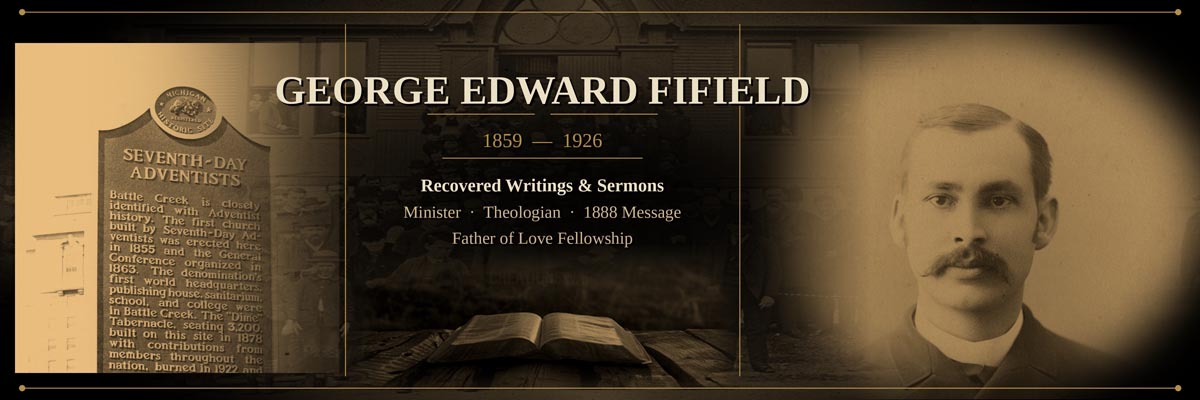
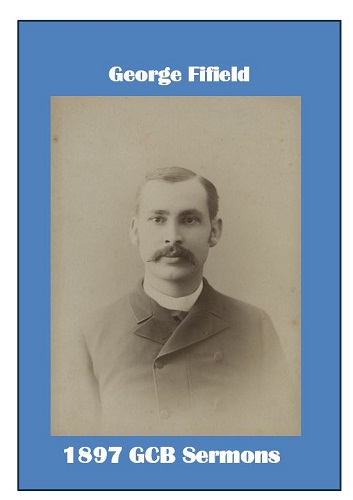
George Fifield