 The Two Covenants are not dispensational; but they represent different, progressive stages of individual Christian experience.
The First Covenant, or “Ministration of Death,” is not intended to abide, but is to be “done away.” It is “glorious” because it brings men under conviction, and condemnation, and gives them a sense of their own helplessness and need of a Saviour, and so starts them on the way to God. Having accomplished this, it is to be “abolished” in that man’s experience, and so give place to the “New Covenant,” the “Ministration of the Spirit,” and “Ministration of Righteousness,” which is more “glorious,” and eternally abiding.
All the righteousness of the Old Covenant is self-righteousness, and but “filthy rags.” All the righteousness of the New Covenant is “Christ’s Righteousness,” the “white robe,” the “wedding garment.”
Our righteousness, the result of our own works, always exalts our own opinions, and condemns all who differ, and seeks to cast them out. Christ’s righteousness, the result of His indwelling life, always loves everyone, however much they disagree or differ from us, and always seeks to lead them to God, and to uphold them in His love and care.
In the New Covenant there is no backsliding, for there, God, in Christ, by the Spirit, is the ever-wakeful, ever-present, and all-sufficient upholding power. From the New Covenant it is easy to backslide into the Old Covenant, where we are on sure backsliding ground. This is true, since we are free moral agents, and so free to take ourselves out of God’s hands; and, also, since we are so prone to take credit to ourselves for even what He does in us.
The one thing that God, in His wondrous love to man, has ever sought to do has been to reveal to him His Everlasting Covenant, and bring him into the joy of its glorious righteousness. This was the spiritual meaning of all the sacrifices, and also of the service of the Sanctuary itself. This was the significance of circumcision, a cutting off, and a flinging away of the flesh. And so Paul says, “We are the circumcision who rejoice in God through Jesus Christ, and put no confidence in the flesh.”
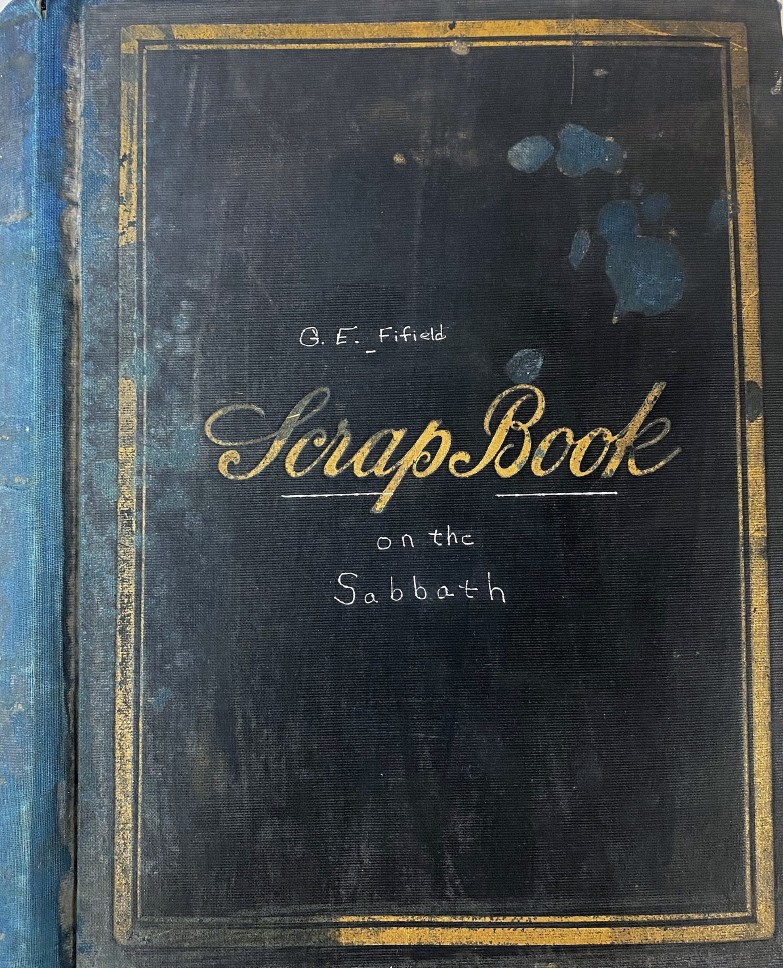
This is the meaning of Baptism, death to self and life in Christ. The Lord’s Supper, also, presents us as living spiritually only as we partake of His crucifixion and resurrection life. The same is true of the Sabbath of the Lord. “Verily my Sabbaths ye shall keep, for it is a sign between me and you, . . . that ye may know that I am the Lord that doth sanctify you.” And “Let no man judge you with respect to the Sabbath days.” The Sabbath is a sign, therefore, between God and each individual soul; and we can keep it spiritually, and really only by ceasing utterly from any hope, or trust, in our own works, and finding sweet rest in Him, even as we are told, “He that is entered into his rest, he also hath ceased from his own labors as God did from His.”
All the ordinances were given by God as expressions of the blessed truth of His Everlasting Covenant, and outward signs of its indwelling life, and power. Men, therefore, were not to get righteousness by doing these things, but these were to be the outward signs of the righteousness they had already received from God by faith. Thus, Abraham did not get righteousness by being circumcised, but, “He received the sign of circumcision, a seal of the righteousness of the faith that he had yet being uncircumcised.” This was New Covenant religion, and New Covenant righteousness.
The later Jews turned this all around, and put circumcision entirely into the Old Covenant, by seeking to get their righteousness by being circumcised. Circumcision thus became a denial of Christ, and, as such, Paul rejected it. Just what the Jews did with circumcision, men, in all ages, have often done with all these ordinances of God. They have done it with the Sabbath; and the righteousness they get out of the Sabbath observance is, therefore, their own righteousness,—the righteousness that condemns and casts out those who differ from them.
Moreover, this fatal mistake is not incidental; it is inevitable. It is the direct result of the method of teaching the Sabbath to the people; and also of teaching concerning human organization, and the exercise of ecclesiastical power.
Men for centuries sought to make themselves righteous under the Old Covenant, —sought, as it were, to lift themselves to heaven by their own bootstraps. When they by experience found out that these efforts were utterly futile and impossible of results, Satan made them think that what they could not do individually, they could do collectively. But all collective and organic efforts toward righteousness are as absolutely productive of only self-righteousness as are our individual efforts. The Sabbath is a sign of rest from all trust in human effort toward righteousness, collective or individual; a cessation from our own works, and a rest in God. It is also a sign of the soul’s emancipation from bondage to human authority, and of its absolute freedom in God. No people, therefore, can truly keep the Sabbath or truly teach it to others until they have first experienced these blessed meanings of the Sabbath in their own souls. Read carefully and prayerfully the fifty-eighth chapter of Isaiah, and you will see that it clearly teaches that the people who will restore the true, spiritual Sabbath to the Church must first have certain experiences themselves; and one of these experiences, twice mentioned to make it emphatic, is “That ye break every yoke.”
The ecclesiastical machines of today are making new and heavier yokes to bind upon the people’s necks. They are seeking to federate, and so unify their authority as to make their dictatorial control more complete.
It is therefore clear that they cannot, with their present experience, and by their present methods, restore to Christ’s true Church the true and spiritual Sabbath which is a sign of the soul’s rest in God from all trust in human effort, and of the soul’s emancipation from human authority. And yet, the true and spiritual observance of the true Sabbath is to be restored, and Christ, when He comes, will be presented with a Church “without spot, or wrinkle, or any such thing.” Who is to do this work? How is it to come about? These are the questions to be considered in this paper.
THE SEPARATION
Nothing is clearer than that the Bible teaches that a separation of true Christianity from the false, so-called Christianity will take place prior to Christ’s return to this earth. Some people believe this separation will take place over the day that will be observed as the Sabbath; and, so they go about devoting almost their entire effort to getting people to observe the right day, and necessarily paying little attention to getting people to experience the spiritual meaning of the Sabbath, since they have not had that experience themselves. In other words, they put the sign before the experience signified, just as the later Jews did with the sign of circumcision, and just the opposite from the way in which, it is clearly stated, God gave circumcision to Abraham. This inevitably puts the Sabbath into the Old Covenant, just as the Jews put circumcision there, and teaches the people to seek their righteousness through obedience, instead of seeking to be made righteous by the divine indwelling, so they can truly and spiritually obey.
Now, there is not a text in the Bible that shows that this separation between true and false Christianity is to take place over the question of the day observed; but every scripture that sets forth this separation shows clearly that the separation takes place over the experience, or failure to experience, this wonderful soul-emancipation from bondage, of which the true Sabbath stands as a sign. In other words, God, today, as He did in the time of Abraham, puts the experience ahead of the sign of the experience.
THE SEVEN CHURCHES
In proof of this assertion, we must now examine the scriptures that speak of this separation. The Seven Churches of Revelation, as all students of prophecy admit, represent seven different phases of the church’s experience, in the different eras of this dispensation. These phases of experience may overlap to a certain degree—i.e., one man, for instance, may be in the Philadelphia experience, while another man has entered the Laodicean phase of experience. Since human experience is individual and progressive, this must be so of all historical divisions of time.
This glorious prophecy of the Seven Churches presents not a closed canon of scripture, with men ever after compelled to be content with a book-religion only,—contact with God only through the written word, as a creed; not a continued inspiration only in the person of the Popes, speaking ex-cathedra; not a continued inspiration in the person of some one prophet, man or woman; but it presents the Living Christ, with the Living Word of God proceeding out of His mouth, walking among the Churches until the end of time.
The Philadelphia Church is the Church of The Reformation, the Church of the open door. God set before the Reformers an open door of opportunity, which no power in earth or hell, outside of their own free choice, could shut. Any of these reformers, and their followers, might have preached The Reformation clear through to the coming of the Saviour. But, by a natural law of creed-writing, operative in all unspiritual men, in each case, soon after the death of the early leaders, the people formulated their creed, and developed a human machine to enforce that creed, and to cast out all dissenters. Thus, in each case, they, by their own free choice, closed the door which God had opened.
THE LAODICEAN CHURCH
The Laodicean Church, in contrast to the Philadelphia Church, is the Church of the closed door, and of the self-righteous Phariseeism, resulting from this collective, organic effort at doing by human methods, God’s work. This church, it is clearly stated, God will “spew out of his mouth.” But, at its closed door, and this closed door is in each Laodicean human heart, Christ stands and knocks,—the same Christ, with the same living Word of God proceeding out of His mouth, that the first chapter presents as walking among the churches until the end. “If any man open the door, Christ will come in to him,” individually, “and sup with him.” When Christ sups with a man, He always breaks the bread. That man will be fed with the blessed “hidden manna,” an “Altar whereof they have no right, or power, to eat who serve tabernacles.” Nothing can be clearer than that this will produce a separation of true Christianity from the false—the separation not over days, or outward observances; but a separation over coming out of the human church of the closed door, by each honest man opening the door of his own heart to be led and taught by Christ, and so to experience absolute soul-freedom in Him. But this is a separation over experiencing the spiritual meaning of the Sabbath. One man has this experience, and another does not, and so the two are separated. One man goes on satisfied with his human, machine-method of religion, which can produce only self-righteousness, until he, with all of his kind, are “spewed out.” The other man repudiates all this merely human authority, and bossism, that has hitherto limited his experience, and comes out into the sunshine of perfect freedom in Christ.
It is well, too, to consider this expression, “I will spew thee out.” This is God’s casting out, not man’s. Now men are looking UP to these ecclesiastical leaders, giving them almost divine homage, and allowing them to limit their experience, and to shut them away from the dawning light of God’s truth. But humanity does not look with favor upon anything that is “spewed out.” Instead, they turn from it with disgust. This forcible figure here used means just this, that God, by His providences, will bring about just this change in the hearts of all honest men. Instead of longer looking to these ecclesiastical leaders, they will turn from them with disgust, and look to God, only.
THE REMNANT
In Micah 4: 1-7, we have the fuller description of this last-day, or Laodicean Church, and of those who come out from it. This closing of the door goes on, until all of the human, machine churches are fully federated, and established in the top of the human, national governments, and exalted above the lesser, or state governments; and they have dictated the creeds, and religious practices of the world, and are enforcing them by law and are loudly proclaiming that, by this means, they will establish universal peace. But God’s true children will not dream this theocratic dream of earthly power, which is the logical full development of the Laodicean idea of the closed door; and so they are “scattered,” and “driven out” and “afflicted.” They “halt,” and do not join the movement. They do not “Say a confederacy to all them to whom this people shall say a confederacy,” and so are “driven out” and “scattered.” But the blessed God assembles them, and makes them a “remnant,” and reigns over them. The remnant, it is clear, comes out of this last-day or Laodicean Church, and so cannot be a part of it. Here again, the separation is not over days, or outward observances, but it is over the deepest possible question of spiritual experience,—the question of whether the soul shall be yielded to the dictates of men, or to the rule of God, only. But again we say, this is the very spiritual experience of which the Sabbath stands as a sign.
BABYLON
Revelation 18: 1-4 gives another wonderful description of this last-day separation of true, from false Christianity. To understand the full meaning of the Babylon from which the Spirit calls out the true Church, we must go back to the meaning of the word, “Babel,” from which “Babylon” comes. “Bab” is Hebrew for “gate,” and “El” is Hebrew for “God.” Bab-el—the gate of God. Nimrod was the first man this side of the flood, who, in order to put himself over other men, into position of power, organized a state-church, thus taking advantage of both the political relations and of the religious beliefs of men, to so hold them together that he could rule over them. Having organized this church, he said, as all such churches have ever since said, “You cannot be saved unless you come in through this church; i. e., this is Bab-el, the gate of God.” Babylon includes all churches that say this.
See the contrast between this Babylonian worship, and true Christianity. Christ sought to place each individual soul naked up against the Invisible Infinite. When the disciples came only to him, the visible Jesus, and would not learn to go, as He did, to the Invisible God. He said, “It is expedient for you that I go away, for if I go not away, the Comforter will not come to you.” He refused personally to step in between the individual soul and the divine Spirit; and if He refused to do this in His personal body, He never commissioned His mystic body, the Church, to occupy this position. But just this is the position occupied by the church that says, “You cannot be saved but by me.” As we are taught in Matt. 16: 15-19, the Rock on which Christ builds His whole Church, is the revelation of Christ by the Spirit, in the consciousness of the individual soul. When Peter showed that he had this experience, Christ said to him, “Flesh and blood hath not revealed it unto you, but My Father which is in Heaven.” In other words, “You did not get it from me, the personal, human Jesus, but as a revelation of God, by the Spirit.” Christ’s true Church is, therefore, founded on the power of the Spirit to reveal God in the consciousness of the individual soul. But every false Babylonian church is founded, and has ever lived and exercised its power, precisely on the denial of this sublime truth, and on the assertion of its opposite; namely, “You can be saved only by coming in through us, we are the gate of God.” This is why the true gospel of Christ, itself, “Casts down all Principalities and Powers, and makes a show of them openly,” by putting the naked soul of the individual in saving touch with God, through the Spirit. When the Spirit calls out the true Church from this Babylon, the separation, we see again, is not over days, or outward observances, but over this deepest of all spiritual truths of which the Sabbath is the sign.
THE SEALING
But this is also just the meaning of the whole sealing and marking message of Revelation. In the figure of the seal, the seal impresses some beautiful design into the yielding wax. In the glorious fact of God’s seal, God’s Spirit warms and softens our cold, hard hearts; and then impresses into them the beauty of the divine law, or of Christ’s righteousness, until the name, or character of God, is written in our foreheads, and manifest in every act of our hands, and “the beauty of the Lord our God is upon us.” In the same way the man who disregards the voice of God in his soul, and yields himself instead to the external, force power, or “beast” power, “Worships the beast,” and receives his character written on his narrowed, hardened brow, and manifest in the cruel acts of his hands. Thus we see again that these scriptures speaking of the “seal,” and the “mark,” reveal the fact that this separation is not over days, or outward observances of any kind, but over this same question of the soul’s inner relation to God which finally reveals itself in the character written in the forehead, and manifest in the acts of the hand. But this, again we say, is exactly that inner experience of which the Sabbath stands as the outward sign.
THE SEPARATION IS BEGINNING
Having seen from the Scriptures the true nature of this last-day separation, and that, as the tares are separated from the wheat, it is only the tares that are bound in bundles, and this in order that they may be burned; while the wheat, each kernel of it, is individually won by the divine love, and gathered into the heavenly garner, it is worth while for us next to see that this separation is already beginning to take place along exactly the lines indicated.
Now, this separation is more apparent in a church manifesting more self-righteous intolerance than any other, and exerting more of its ecclesiastical power to cast out those who dare think for themselves, and let the Spirit teach them. Some recognize the fact that this separation is taking place; and call it the “Sifting Time.” They, however, comfort themselves with the thought that it is the chaff that is being sifted out. They forget that the sieve was never yet invented that would let the chaff go through and hold the wheat. They forget, also, that in every progressive experience of the Church, the old human organization has ever been the sieve that has held the chaff, and cast out the true wheat,—the wheat that has always been upheld by God, so that not a kernel of it has fallen to the ground.
Some of the leading, and most spiritual preachers and teachers, and many of the people who rejoice in advancing truth have been cast out from the churches to which they belonged. At first this was a great grief to them, but now they rejoice in it. They made the transition, under divine guidance, of which the writer of the book of Hebrews speaks (Heb. 12: 18-24),—the transition from the audible to the inaudible, from the visible to the invisible, from only thinking they walked by faith (when in reality they were walking by sight) to really and truly walking by faith in the unseen. And while going through this most difficult of all experiences,—while learning this most difficult lesson,—God upheld them, and kept them faithful to His advancing light.
Every now and then we find some sweet Spirit-taught soul who has separated himself from the machine organization, and from the dead formalism of some one of the churches, to yield his heart to the divine will, and the divine guidance only. In every such instance observed by the writer, such separated individual has been led to the same glorious truth of the divine organism of the true Church of Christ, in contrast to all human organization, and also to a belief in the near, personal return of our Lord to this earth. It is easy to see that as church federation progresses, and the religious trust is completed, and begins to exert its power,—the same sort of arbitrary power now being exerted by some church organizations,—all Spirit-taught souls in all of these federated organizations will finally hear the Spirit’s call, “Come out of her, my people.”
Thus the separation will be complete. On the one hand will be the human church, controlled by the human, machine organization, and actuated by human, and by diabolical power,—a church “worshipping the beast, and receiving its mark.” On the other hand will be the true Church of Christ, emancipated from all human bondage, each individual soul under the guidance of the divine Spirit, consecrated to the worship of God alone, and to the supreme service of Love. They will thus have had the experience of the spiritual meaning of the Sabbath, and they will have “broken every yoke,” though they may not yet have received the Sabbath, itself.
But as the human federation church tightens the lines of its authority, it will enforce Sunday observance as the very sign, and mark of its power. Every one of these Spirit-taught souls will know that true religion is from within, the manifestation of the divine life there implanted, and that it cannot be enforced from without. They will, therefore, repudiate such enforced observance of Sunday, and will thus be brought by God’s providences to just the right attitude of mind, and of heart, to see the complete fraud of the Sunday institution itself. Thousands in a day, perhaps, under the wonderful power of God that is “lightening the earth with its glory,” will be brought to the true Sabbath, a sign between God, and the individual soul, that He is abiding there to sanctify. They will, therefore, receive the experience of the Sabbath first, and after that, the Sabbath itself, exactly as described in Isaiah, the fifty-eighth chapter, and exactly as Abraham received circumcision, as a “Sign of the seal of the righteousness of the faith that he had, yet being uncircumcised.” Received thus, as God intended, the Sabbath will be a sign of the New Covenant, and an outward manifestation of Christ’s righteousness, with no self-righteousness in it.
THE HOLY TEMPLE
Then the spiritual Temple, Christ’s Church, “built on the foundation of the apostles and prophets, Christ Himself, the chief corner stone, in whom the whole building, fitly framed together, has grown into a holy Temple in the Lord,” completely cleansed from all iniquity, will stand forth, “as the morning, fair as the moon, clear as the sun, and terrible as an army with banners.” “Henceforth there shall no more come into her the uncircumcised, or the unclean.”
“She will have awakened, and arisen from the dust, and put on her beautiful garments.” Side by side the “Mystery of God,” and the “Mystery of Iniquity,”—the Church of Christ, and the church of the world; one actuated and empowered by Christ, and the other actuated and empowered by Satan, will lift themselves for the closing conflict—the conflict of the ages. Satan will work “with all power and signs, and lying wonders, and with all deceivableness of unrighteousness,” but Christ will pour out the divine Spirit of infinite power upon all who are His. It will be more than Pentecost over again, even the early, and the latter rain, “restoring all the years which the locusts have eaten.”
Christ’s power, before the whole universe, will be demonstrated to be more than sufficient. “No weapon that is formed against His, shall prosper, and every tongue that is raised in judgment against His children, they shall condemn.”
No language can fitly picture the glory of this closing work, and of the final triumph. How puerile, and weak are all human, creed-bound concepts of it! Even now, in this midnight hour of darkness, when, all around us, even God’s children are slumbering and sleeping, we should begin to feel the thrill, and the hope, and the inspiration of the dawning, and to know that “He is establishing us in righteousness, and making us far from oppression.” We should hear His voice saying to us, “Oh, thou afflicted, tossed with tempest, and not comforted, behold I will lay thy stones with fair colors, and lay thy foundations with sapphires. And I will make thy windows of agates, and thy gates of carbuncles, and all thy borders of pleasant stones. And all thy children shall be taught of the Lord, and great shall be the peace of thy children.”—Isa. 54: 12.