Editorial Notes • March 26, 1896 • American Sentinel, Vol. 11, No. 13
The legislators of Massachusetts are wrestling with the following proposed amendment to the constitution of that State:—
No law shall be passed respecting an establishment of religion or prohibiting the free exercise thereof, nor shall the state or any county, city, town, village or other civil division, use its property or credit or any money raised by taxation, or otherwise, or authorize either to be used for the purpose of founding, maintaining or aiding by appropriation, payment for services, expenses or in any other manner, any church, religious denomination, or religious society, or any institution, society or undertaking which is wholly or in part under sectarian or ecclesiastical control.
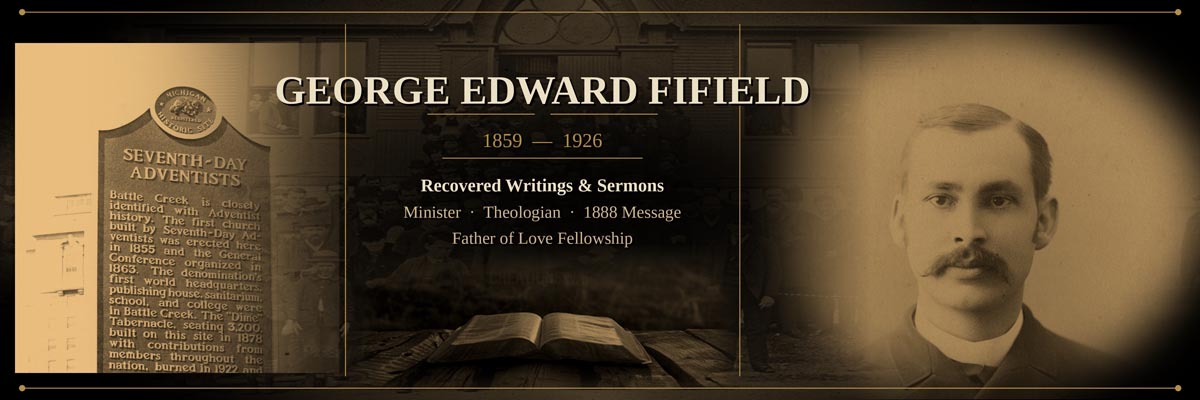
Thursday, March 12, the committee having the amendment in charge gave a hearing upon it, concerning which the Boston Daily Globe of that date says: "The amendment appeared innocent enough at this, its second hearing, to the committee, and to the gentlemen who were the immediate cause of its introduction, but before the hearing was over, and after the first three witnesses had departed, the committee had its eyes opened very wide to the possibilities of the proposed amendment, and the variety of interpretations which could be placed on it; not the least of which was the entire abolishment of all Sunday laws. So that the Christian gentlemen who have introduced the amendment have, innocently enough, given free thinkers, Mahomistans, Buddhists, and, in fact, every phase of religious thought something to fight for, and to urge, providing they look at it in the same light as did Rev. George E. Fifield of South Lancaster and Rev. Frederick C. Gilbert of Everett, at the hearing this morning.
"The claim these two latter gentlemen made was that the amendment was a very good and necessary thing, because it would separate once for all, in Massachusetts, Church and State, even to the recognition of any particular day as a day of worship, because they maintained that the legal recognition of the present Sunday was in itself a recognition of Christianity, and they did not think that good Christians needed any such assistance from the government—they would observe the Sabbath whether there was a law or not.
"Mr. Fifield said it was a poor kind of religion that needed assistance from any government. Christianity had its birth without governmental sanction, and its growth was not due to any governmental assistance. The God he worshiped did not need the assistance of any government. He quoted from the fathers of the Constitution to prove that it was their intention to not even recognize Christianity so as to prevent entirely any possibility of the union of Church and State.
Mr. Gilbert, who is a Seventh-day Adventist, but who was formerly a Jew, and is now working among the Hebrews of this vicinity, thought the proposed amendment would give the Jew, who observed Saturday as a day of worship, an opportunity to do business on Sunday, and the members of other religions an opportunity to observe their particular days of worship with the same results. He did not see anything wrong in that, and thought it would be a good thing for all. It
would give everybody the same opportunity that the Sunday worshipper now enjoyed, and he thought that was an equitable proposition.
"When asked whether he thought saloons should be permitted to do business on Sundays, he said if the State thought the saloons were a good thing six days a week, then they were certainly good things for the seventh day; but if saloons were not good, then they should be abolished altogether."
The Globe thinks that the gentlemen who proposed the amendment had in view only "the latter part, which refers to the use of State funds for sectarian purposes, but in order to give the thing an air of 'freedom,' the first lines were inserted as a sort of meaningless 'glittering generality,' a sort of feather from the eagle, to make it soar. But it is this part of the amendment that will make trouble for the law, as it is a direct blow at the Sunday holiday as at present observed."