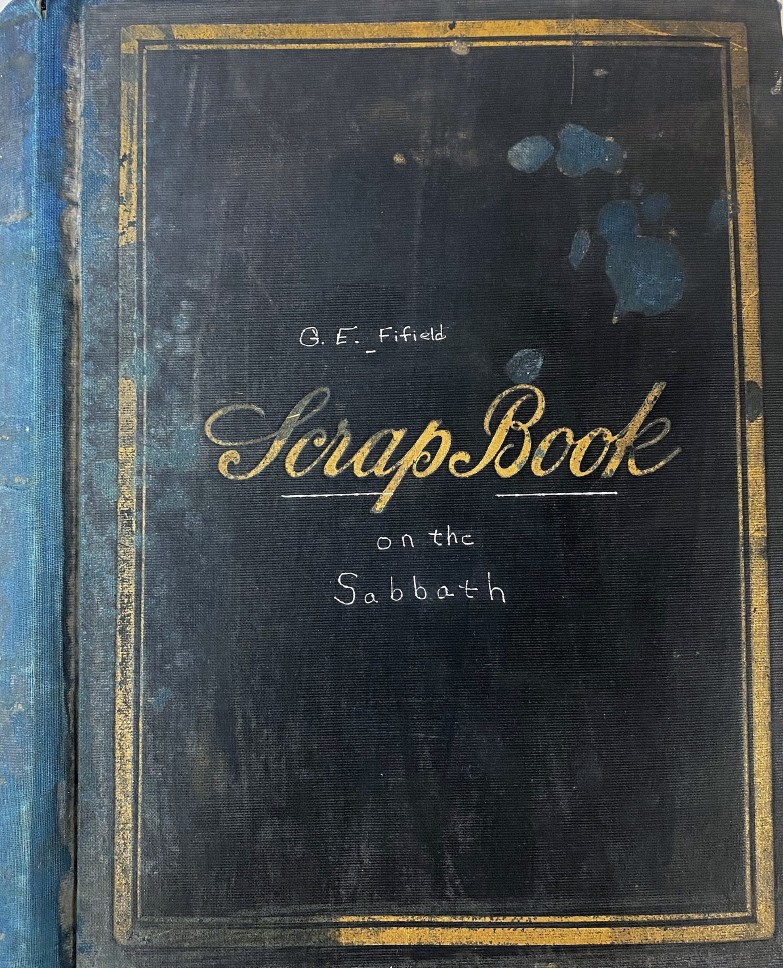
THE ULTIMATE REASON FOR RELIGIOUS LIBERTY
Text: "Arise, shine, for thy light is come, and the glory of the Lord is risen upon thee." Isaich 60: 1.
Those who believe in a union of religion and the state, while disclaiming a belief in a union of church and state, seem to think that Christian and American liberty is founded on nothing deeper and holier than sectarian jealousy. It would be wrong, they admit, to have any one sect united with the state, since thereby that sect would gain undue power to dictate to other sects, and so the delicate balance of spiritual authority be destroyed.
At the same time it would be right in their minds, to have a union of religion and the state, since thereby religion would gain more power over all men. They forget that it is a question of what kind of power, and of whether that power is exercised from within or from without. True religion is the power of love controlling from within, while the State has only the power of arbitrary force which can control only from without.
A union of religion and the state, when such union reached the courts, would necessitate a judicial decision as to what religion was; and that around such a decision there would inevitably grow up a religious sect, backed by the state authority, and seeking to coerce other sects; thus a union of religion and the state would ultimately be a union of that church and the state.
Of course in each man's mind, true religion is synonymous with the teachings and practice of his church and so the only satisfactory union of religion and the state for him would be the union of his church with the state. And under this thin disguise this new idea of a union of religion with the state is, for the teachings of the Pilgrim Fathers and of the Roman Church in all its history, it will be remembered that both of these ever professed to believe in religious liberty, but their idea of religious liberty, to state it personally was that it is wrong for you to enforce your religion upon me because your religion is false; but it is right for me to enforce my religion upon you because my religion is true. All such thinking utterly fails to grasp the true and ultimate reason for religious liberty.
True religion works from within, by the power of love. The power of the State is that of arbitrary, external authority, the power of the sword. Jesus forbade, utterly, the exercise of such power and authority. Not only to the State over the Church, and not only to the state over religion, but also to the Church itself, over its own members. Indeed it was to His disciples, - His Church that He uttered the memorable words "ye know that the Princes of the Gentiles exercise dominion over them, and they that are great exercise authority upon them, but it shall not be so among you."
It matters not a whit whether a man calls himself an ecclesiastic, and works in the Church, or whether he calls himself a politician, and works in the State, the evil, the wickedness is that external authority is exercised in religious matters at all. Only he who is born from above can see the Kingdom of Love, and only he who has experienced the working of the divine love in the soul can fully understand the ultimate reason for this.
Jesus teaches here that a man can not even so exercise authority over himself as to make himself grow spiritually, far less can he do it over any one else. "Which of you by taking anxious thought can add one cubit to his stature?" But the Saviour immediately proceeds to reveal the wonderful secret, and method of spiritual development. "Consider the lilies of the field how they grow; they toil not, neither do they spin, and yet I say unto you, that even Solomon, in all his glory, was not arrayed like one of these. If God so clothe the grass of the field, shall He not much more clothe you, Oh, ye of little faith?" This clothing of the lilies and all the flowers with beauty, is not from without, but by implanting within a living principle of beauty, and then allowing that principle to develop, and express itself externally. This expression must be absolutely unhindered and uninterfered with from without
If a man should decide that a flower was not opening as soon as it should and try to pick open the blossom, he would inevitably spoil it. If he sought by external means to force the flower to grow into some peculiar shape more pleasing to him, he would surely ruin it. It would not matter whether the man who did this was the most scientific botanist, or the most awkward country fellow, the result would be equally disastrous, to the beauty of the blossom. And if this is true of a physical flower, what of the spiritual beauty of the immortelles that are to bloom forever in the Garden of the King. Spiritual beauty, and perfection of character is not "made after the law of a carnal commandment but after the power of an endless life.
It is by the new birth that this divine life, this "endless life," this principle of spiritual beauty, is implanted within. It must have the spiritual food of the living Word; it must breathe the spiritual air of communion with God; it must take the Spiritual exercise of good works; but it must be absolutely uninterfered with from without. Any attempt to make the growth fit any creed or conform to any external religious authority is but to stunt it and deform it and prevent the fulfillment of the splendid promise that "His glory shall be seen upon thee."
This is the ultimate reason for religious liberty. All other reasons come because of this. And this reason not only outlaws and prohibits all union of religion and the State, as well as of Church and State, but it shows the arbitrary authority exercised within the church itself is evil. The Church that is true to the teachings of its divine Master, never exercising arbitrary authority within itself, will never ask for a union of religion and the state or of Church and State.
"Arise, shine, for thy light is come and the glory of the Lord is risen upon thee."
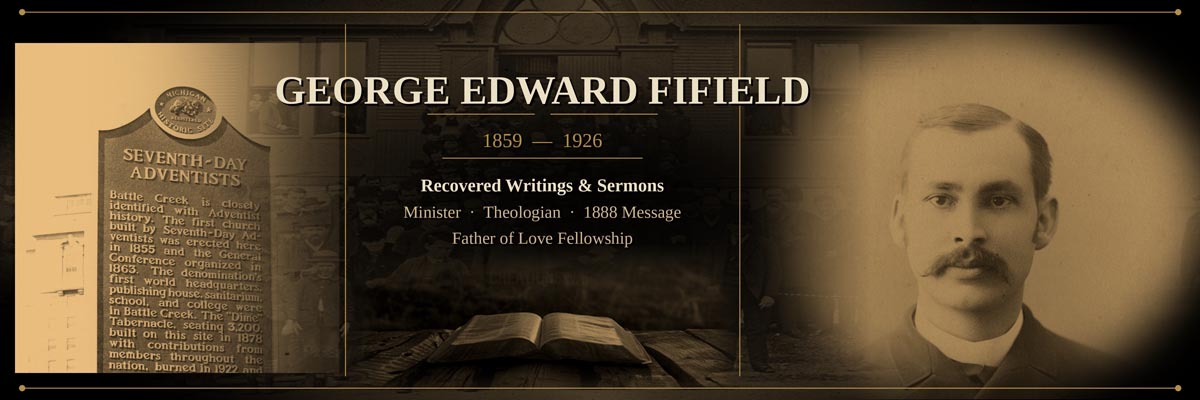
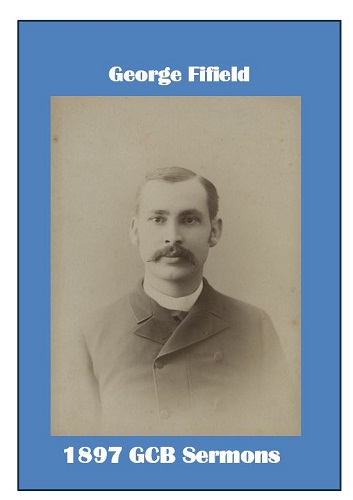
George E. Fifield