Scripture Readings: First John 2: 9 to 11; 3: 1 to 3; 4: 7 to 21.
Text: “Herein is our love made perfect, that we may have boldness in the day of Judgment, because as he is, so are we in this world. There is no fear in love, but perfect love casteth out fear; because fear hath torment. He that feareth is not made perfect in love.” I John 4: 17 and 18 verses.
Ultimately considered there has never been but two kinds of religion in the world. There is the worship of God through the motive of love, and the worship of the devil, through motives of fear. It is not that many people openly and professedly worship the devil, but there is a sect in Persia who call themselves devil worshippers. Their philosophy is that God, if he is good, will not harm them so why worship Him or seek to appease Him, but the devil is a malignant and evil being who might break forth with wrath or destruction, and we must sacrifice and worship him to appease and propitiate him to be safe from his wrath.
You will see the object of worship is to appease. Without dwelling upon this you will note that this has come over from paganism into the Christian church and influenced our worship of God. But that which is done through fear and to appease wrath is not true worship. The very meaning of the word “worship” is supreme reverence, adoration, and love. This thought of the devil worshippers of Persia is supreme in all heathenism. Aside from this the Persian mythology conceives of two gods, Ormazd (Ahura Mazda) and Ahriman, equal in power and authority, one the creator and author of all that is good and the other of all that is evil. And Ahriman, the creator and author of evil is appeased with sacrifices.
Outside of the dualism of Persia the Bible recognizes the principle that when we profess to be worshipping God, if we have a diabolical concept of God and are inspired in our worship by fear instead of love, we are really not worshipping God but the devil. The gods and idols of the heathen were not professedly a representation of Satan but of their concept of God, and yet they were ever monsters of lust and of evil that must be appeased by sacrifice. The scripture says “The things which the gentiles sacrifice, they sacrifice unto devils and not unto God and I would not that you should have fellowship with devils. And if the gentiles in professing to worship the true God because they had a false and evil concept of Him were really worshipping the devil, who can say that this principle ceased just where professed Christianity came in.
No gentile ever had a more diabolical concept of deity than did the ultra-Calvinistic theologians of the Scottish Kirk. We quote below a quotation from Henry Thomas Buckle in his History to Civilization. And remember Buckle did not originate these sayings for he gives his authority for each statement. They come from the sermons still extant of the great preachers of their time:
“The clergy boasted that it was their special mission to thunder out the wrath and curses of the Lord. In their eyes the Deity was not a beneficent being but a cruel and remorseless tyrant. They declared that all mankind, a very small portion only excepted, were doomed to eternal misery. They delighted in telling their hearers that they would be roasted in great fires and hung up by their tongues. So refined was their cruelty that one hell was succeeded by another, and lest the sufferer should after a time grow callous, he was moved on that he might undergo fresh agonies in fresh places. All this was the work of the God of the Scotch clergy.”
No wonder Whittier broke forth in his poem “The Eternal Goodness” and says:
“I walk with bare hushed feet the ground
Ye tread with boldness shod;
I dare not fix with mete and bound
The love and power of God. —
The wrong that pains my soul below,
I dare not throne above,
I know not of his hate, — I know
His goodness and his love.”
There have been a few Christians along the whole history of the Church, here and there who have known that God is love; that His hatred was of evil only. His wrath of sin only. That he was the great all-embracing love, and their worship has been true, the outreaching of the sonship of the soul to its Father God. In every trial and affliction their souls have rested in God and waited patiently for Him. Many others believing God was partly love and partly hate have worshipped Him oscillating between love and fear. In the time of trial when their souls needed the consciousness of Divine Love, they felt they had incurred His anger and wrath. And some, like those of the Scottish Kirk have grovelled in abject fear before such a diabolical god. The whole philosophy of worship is that we become like that we worship.
The Bible commands us to fear God. "Fear God and keep his Commandments." Fear God and give glory to him. "The secret of the Lord is with them that fear him." The original word is "Yare" or "Yarah" both defined by Young and others to mean "reverence"; and reverence is defined as love mingled with awe or worship. And worship is defined as supreme adoration and love, so that the love thought ever predominates over the fear thought in the word. If the translators had known God as Christ knew him and as he sought to reveal Him to us, instead of having their theology tinctured with Calvinism of the Scottish Kirk they would have given the love thought precedence and translated it love instead of fear. Just one text will prove this. "Fear God and keep his commandments." It is not fear but love that keeps the law. "This is the love of God that ye keep His commandments." We do not tell our secrets to those we fear but those we love, so the text "The secret of the Lord is with them that 'love him'," it would have been instead of fear.
The wise man in the word defines the fear of God as "The fear of God is to hate evil, that is, to love good or God". The Psalmist tells us, "What time I am afraid I will trust in God." Psalm 56:3. "I will trust and not be afraid" Isaiah 12:2. The sinner sees God through the smoky glass of his own sinfulness and why should he not be afraid. Only the pure in heart can see God. It is well for the sinner to be actuated by fear and be restrained until he comes to know God and is held to the true orbit of his life by the mighty attraction of Divine love.
But says one, I am afraid of being deceived and led astray by so many winds of doctrine and there are so many seductive philosophies. Can I trust myself? No, trust GOD. If your son, ask bread will you give him a stone? Multitudes of people have backslidden because they were afraid, they would not be able to stand in the day of the seven last plagues. But the promise is "As thy day so shall thy strength be". I do not know what is coming but God prepares us so that when it comes, we will be able, with His strength to stand.
Yes, but I am fearful of the judgment. "Perfect love casteth out all fear that ye may have boldness in the day of judgment." That is the time of supreme testing. Supreme love will be the judge. The whole process of salvation is that He, by His Spirit sheds abroad His love in our hearts and makes our heart a centre of His love and kingdom and establishes a lesser throne there. And when love is on the throne of the universe, we will have perfect love which will give us boldness in the day of judgment.
The Psalmist says "Bless the Lord, O, my soul, and forget not all His benefits. Bless the Lord, O, my soul, and all that is within me, Bless His holy name."
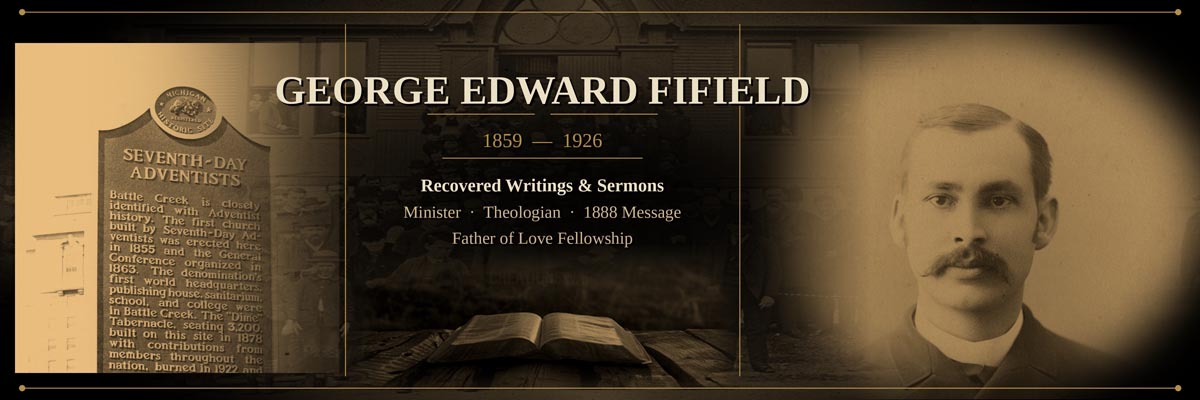
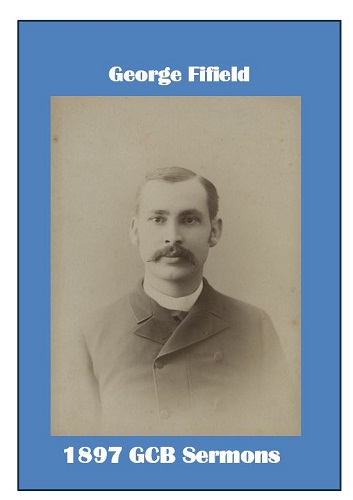
George E. Fifield