"THE CRUCIFIXION OF JESUS."
(God's reason for Permitting it.)
Text: "Yea, a sword shall pierce through thy own soul also, that the thoughts of many hearts may be revealed." Luke 2:35
These are the inspired words of the prophet Simeon to Mary, who was to become the Mother of Jesus. Adam Clark says the expression "Yea a sword shall pierce through thine own soul also" is an oriental figure, signifying poignant grief. If we consider all the circumstances, we will have no difficulty in seeing that this is an inspired prophecy referring directly to the crucifixion of Jesus.
Every mother will understand Mary, under the inspiration of the Holy Spirit accepted the humiliation of expecting to become a mother without being a wife, accepted this thought and expectation not knowing but her affianced husband would reject her because of it. And all this because of the promise, "thou shalt conceive in thy womb and bring forth a son and shalt call his name Jesus. And he shall be great and shall be called the Son of the Highest; and the Lord God shall give unto Him the throne of his father David. And he shall reign over the house of Jacob forever; and of his kingdom there shall be no end."
Because of this promise that she should be mother of the Messiah, the King of Israel, Mary accepted the sacrifice with all its possible disgrace and rejoiced in the Lord because of it, saying "My soul doth magnify the Lord, and my spirit hath rejoiced in God my Saviour. For He hath regarded the low estate of His handmaiden; for behold from henceforth all generations shall call me blessed."
We can see with what motherly pride and joy Mary watched the growth and development of the boy and the miracles and work of the man, Jesus, after He had entered upon His mission. And when He made His triumphal entry into Jerusalem and the people shouted, "Hosanna in the highest, to Him that cometh in the name of the Lord", she thought all her hopes and dreams were soon to be realized and that her son was to be acknowledged King.
Then, only a few days later, instead of crowning Him King, they crucified Him between two thieves, every hope she had built upon Him seemed to perish, then it was that a "sword pierced through her own soul."
This expression of the prophet Simeon, given under the inspiration of the Spirit, is, therefore, the most direct and comprehensive statement in the whole Bible of God's reason for permitting the physical crucifixion of His Son.
Is it that it was only through the physical death of Jesus that any man from Adam down to the end of time, could be saved from eternal death? If this were true, this was the time to state it; for any right-minded woman would be willing to have her son slain for such a reason as that.
But we know, from the whole Bible that salvation is a spiritual thing, and therefore it cannot be accomplished by any physical act, however great. We know from the Bible that salvation is a matter of LIFE not of death; yea of spiritual Life not of physical death, —of Spiritual Life, —the life of God imparted by God, through Christ, and received by us through faith. And we know that because of the gift of Christ from the foundation of the world, the fountain had already been opened, and was freely flowing from the throne of God, and coming so near every lost soul that "Whosoever will might take thereof and live." And we know that men had already been saved and sanctified, and even glorified, resurrected, and translated, and taken into the fulness of heaven's joys by this imparted LIFE OF GOD IN CHRIST. So, we can understand why Simeon, speaking by divine inspiration, did not give the reason for the death of Jesus as given by some modern theologians.
"Was it that the price which God had demanded before He would admit man to pardon and salvation, might be paid? There is no hint of any such thing.
Was it that God's wrath might be appeased and He be propitiated?
We answer that all these reasons given by theology for the death of Christ are not even hinted at in this answer given by inspiration of God."
The reason given is "That the thoughts of many hearts might be revealed." That the thoughts in the heart of God might be revealed,—thoughts of infinite and unchanging love, unchanged because of sin,—love for sinners and even for unrepentant sinners, and those still "dead in trespasses and sins", love that withheld not His only begotten Son, but sent Him to reveal the love of God for us, and to reveal it to us even when we were blind and dead because of sin; that we might be brought to see and understand God's wonderful, unchanging love; that every barrier that sin had built up between us and God might be broken down; that we might be ashamed of our misunderstanding and so come to repentance,—that God might pardon us freely; that He might save us; that He might sanctify us; that He might glorify us; so that all things might be of God.
This was the meaning of the life and death of Christ, TO REVEAL God, Immanuel God with us. He said, "He that seeth me, seeth the Father also." "No man knoweth the Father but the Son, and he to whomsoever the Son may reveal Him." Wonderful mission to reveal to erring, sinning humanity the LOVE THOUGHTS IN THE HEART OF GOD.
Second, that the thoughts in the heart of Satan might be revealed, thoughts of envy and jealousy and of absolute heartless cruelty that could lead men to kill one so loving as Christ; so that his thoughts and motives being made plain, Satan might be cast down and out of the hearts of honest men and also out of heaven, no more to be the accuser of the brethren. It was with direct reference to His crucifixion that Jesus said of Satan "Now shall the prince of this world be cast out." Satan had accused and maligned God. When the true thoughts of infinite and unchanging love in the heart of God were revealed, then, and by the same means, the thoughts of malignant, jealous hate in the heart of Satan stood revealed also and Satan was cast out.
Third that the thoughts in the hearts of the chief priests and pharisees and ecclesiastical leaders of the Jews, might be revealed, —jealous, ambitious, self-seeking thoughts covered with a cloak of religion. That these thoughts and motives of their so-called spiritual leaders being made plain to the honest children of Abraham, they might be emancipated from the bondage of sect and creed, and leaders who were false, be led out by the Spirit into the freedom of Christ and into the Pentecostal power of his love.
Fourth that the thoughts in the hearts of the disciples themselves might be revealed and prepared to receive the outpouring of the Spirit. There was much of selfishness in the hearts and motives of the followers of Jesus. When they left their fisherman's nets and the receipt of customs to follow Jesus. All through the three and a half years of the ministry of Jesus, they had grieved His heart by jealous strife as to who should have chief honour in his kingdom. Even on the night of the last Passover, Christ's last evening with them, they refused to take the attitude of a servant. The Holy Spirit could not be poured out upon self-seeking disciples, until they understood their own motives, and the thoughts of their own hearts were revealed to them. This was done in the crucifixion of Christ. Every selfish hope they had built upon the human and earthly kingship of Christ died when He died. If they now stood by Him at all they must go out and preach not a Christ as a world King, but a Christ crucified between thieves. This revelation of their own thoughts prepared them to receive the outpouring of the Holy Spirit with power to preach the Gospel of a crucified Christ.
And lastly that the thoughts in our own hearts might be revealed to us now. For the reasons why men reject Christ today are precisely the same as why they rejected Him then. They still say, "we will not have this man to rule over us." We never see ourselves so truly or understand the thoughts of our own hearts so well as when we find ourselves at the foot of the cross of Calvary. We are either among the faithful few or among those who forsook Him and fled. God grant that we may see ourselves where we are and as we are, and if we do, we will see God's great unchanging love towards us as revealed in Christ on Calvary.
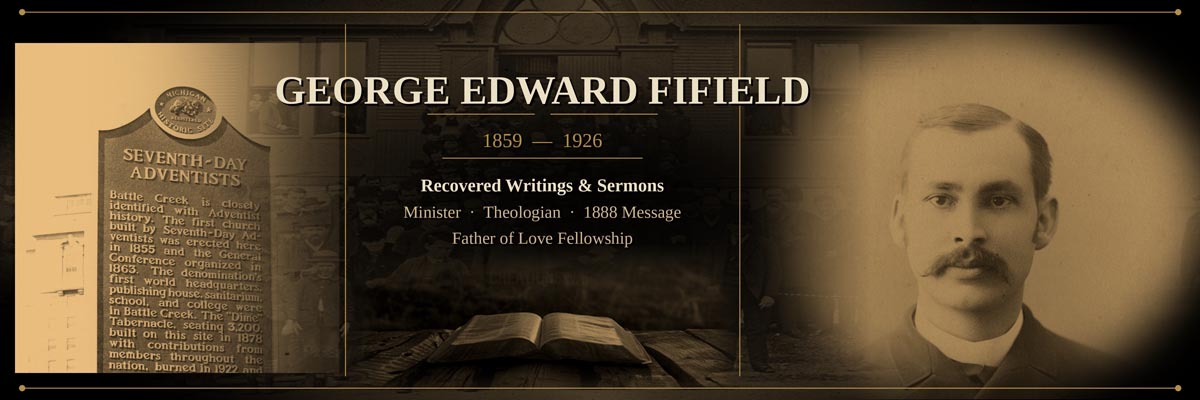
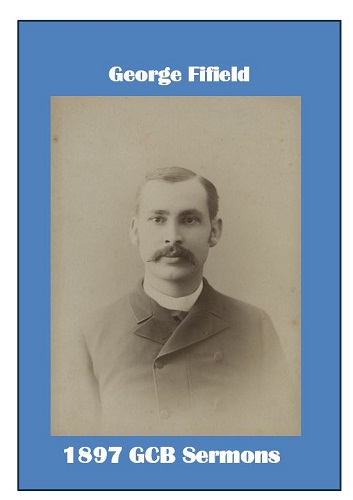
George E. Fifield